If you’ve ever looked at your pond in spring or early summer and spotted green water or string algae creeping along the rocks, don’t panic. Algae is one of the most misunderstood parts of pond ownership. In fact, a small amount of algae is completely natural, and in many cases, it’s actually a sign that your pond ecosystem is functioning exactly as it should.
The key isn’t eliminating algae entirely. The goal is balance.
Your Pond Is Alive and Algae Is Part of It
A pond isn’t meant to behave like a swimming pool. It’s a living ecosystem filled with fish, plants, beneficial bacteria, insects, and microscopic organisms all working together. Algae naturally develop as part of that environment.
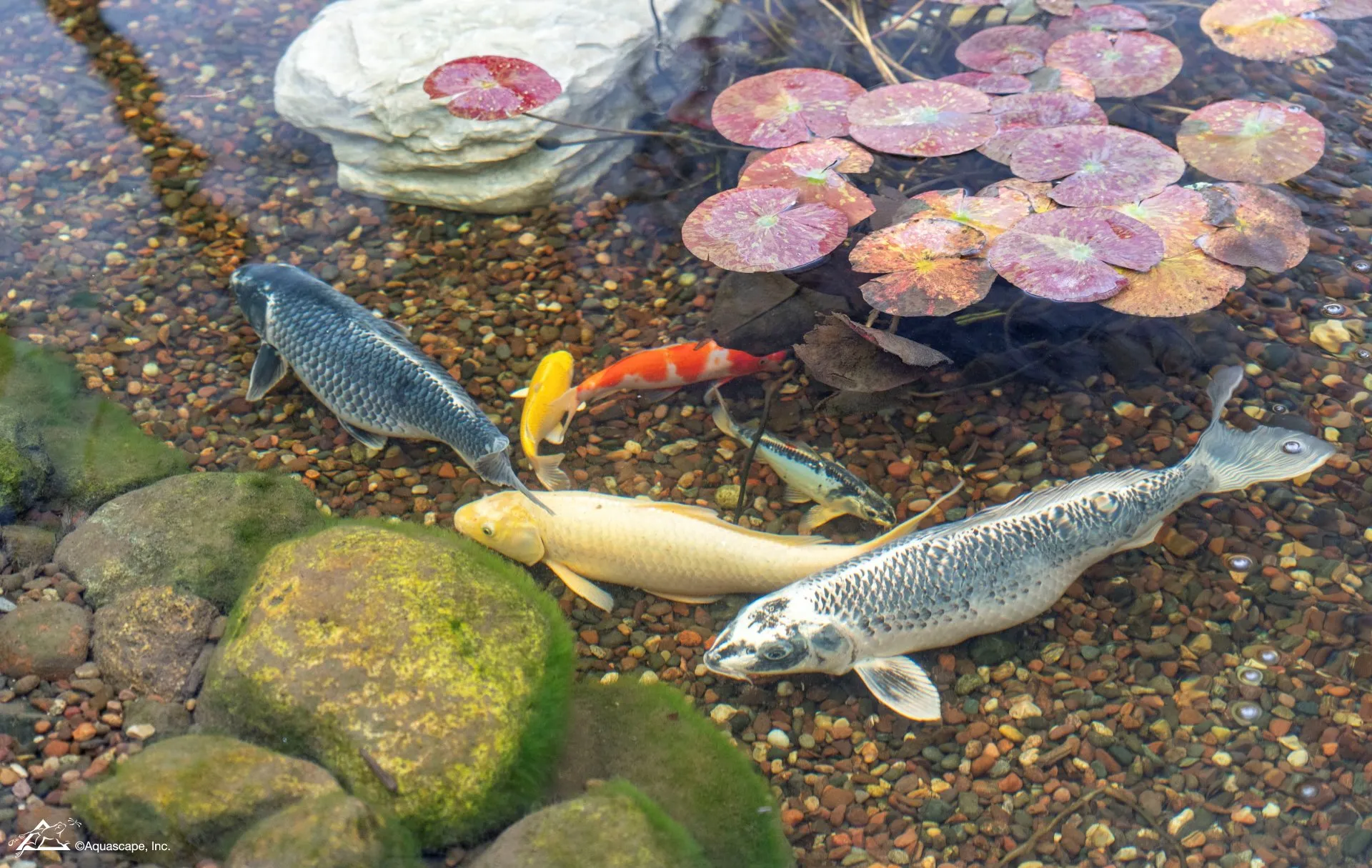
Think about a natural lake or stream. Rocks are often coated with a thin layer of algae, and aquatic life depends on it more than most people realize. In a backyard pond, a light coating of algae on rocks and gravel can actually help soften the appearance of the pond and make it feel more natural.
Why Some Pond Algae Can Be Beneficial
Not all algae are bad. In moderation, algae provide several surprising benefits:
- It absorbs excess nutrients from the water
- It produces oxygen during daylight hours
- It provides a natural food source for koi and goldfish
- It supports the biological balance of the pond ecosystem
Koi and goldfish will often graze on algae throughout the day, almost like underwater lawnmowers. In many cases, a pond with a little algae is healthier than a pond stripped completely clean with excessive chemicals.
Why Algae Gets Worse This Time of Year
Spring and early summer are peak algae season for one simple reason: your pond wakes up faster than the rest of the ecosystem.
As water temperatures rise, algae start growing immediately. Meanwhile, beneficial bacteria colonies are still rebuilding after winter dormancy, and pond plants haven’t fully filled in yet to compete for nutrients. That temporary imbalance gives algae an opportunity to flourish.
It’s also very common to see algae appear after a pond spring cleanout. During a cleanout, accumulated debris is removed and the pond is refreshed, but the ecosystem essentially resets itself for the season. Rocks that were previously shaded may suddenly receive more sunlight, and aquatic plants haven’t grown enough yet to provide coverage and nutrient competition. That combination of increased sunlight and limited plant growth creates ideal conditions for temporary algae blooms.
The good news? In a properly balanced ecosystem pond, algae problems usually calm down naturally as the season progresses.
The Goal Is Control, Not Perfection
One of the biggest mistakes pond owners make is trying to create perfectly sterile water. Crystal-clear water doesn’t necessarily mean a healthy pond. Instead of chasing perfection, focus on reducing conditions that encourage excessive algae growth.
Here are some of the most effective natural ways to minimize algae:
Add More Pond Plants: Aquatic plants are algae’s biggest competitor. Waterlilies, floating plants, marginals, and submerged oxygenators all absorb nutrients that pond algae need to survive. They also help shade the pond and reduce sunlight penetration. Aim to cover about half of your pond’s surface with plant material during the growing season.
Keep Beneficial Bacteria Levels Strong: Beneficial bacteria help break down fish waste, decaying leaves, and organic debris before algae can feed on them. Spring bacteria treatments are especially important while biological filtration is catching back up after winter.
Remove Debris Early: Leaves, sludge, uneaten fish food, and decaying plant matter all release nutrients into the water as they break down. Less waste means less algae fuel.
Improve Water Movement: Algae tend to thrive in stagnant conditions. Good circulation and aeration help oxygenate the water and support beneficial bacteria activity.
Don’t Overfeed Fish: Fish food eventually becomes algae food. Feed only what your fish can consume quickly, especially during seasonal transitions when their metabolism is still adjusting.
A Balanced Pond Will Always Have Some Imperfections
Nature is never completely spotless, and that’s part of what makes a pond beautiful. A few strands of algae on a waterfall rock or a light green tint during spring startup doesn’t mean something is wrong. It means your pond is alive and adapting to the season.
With proper filtration, healthy plant coverage, beneficial bacteria, and patience, your pond will naturally move toward balance. And when it does, algae become far less of a problem.