A beautiful pond should feel relaxing, clear, and full of life. But even the healthiest water gardens can run into occasional water quality issues throughout the season. If your pond water suddenly looks cloudy, develops algae, or starts collecting sludge, don’t panic. These are some of the most common challenges pond owners face, and in most cases, they’re easy to manage with a few simple adjustments.
The key to a healthy pond always comes back to three essentials: proper filtration, good water circulation, and a balanced ecosystem. When those elements are working together, your pond becomes naturally easier to maintain and enjoy.
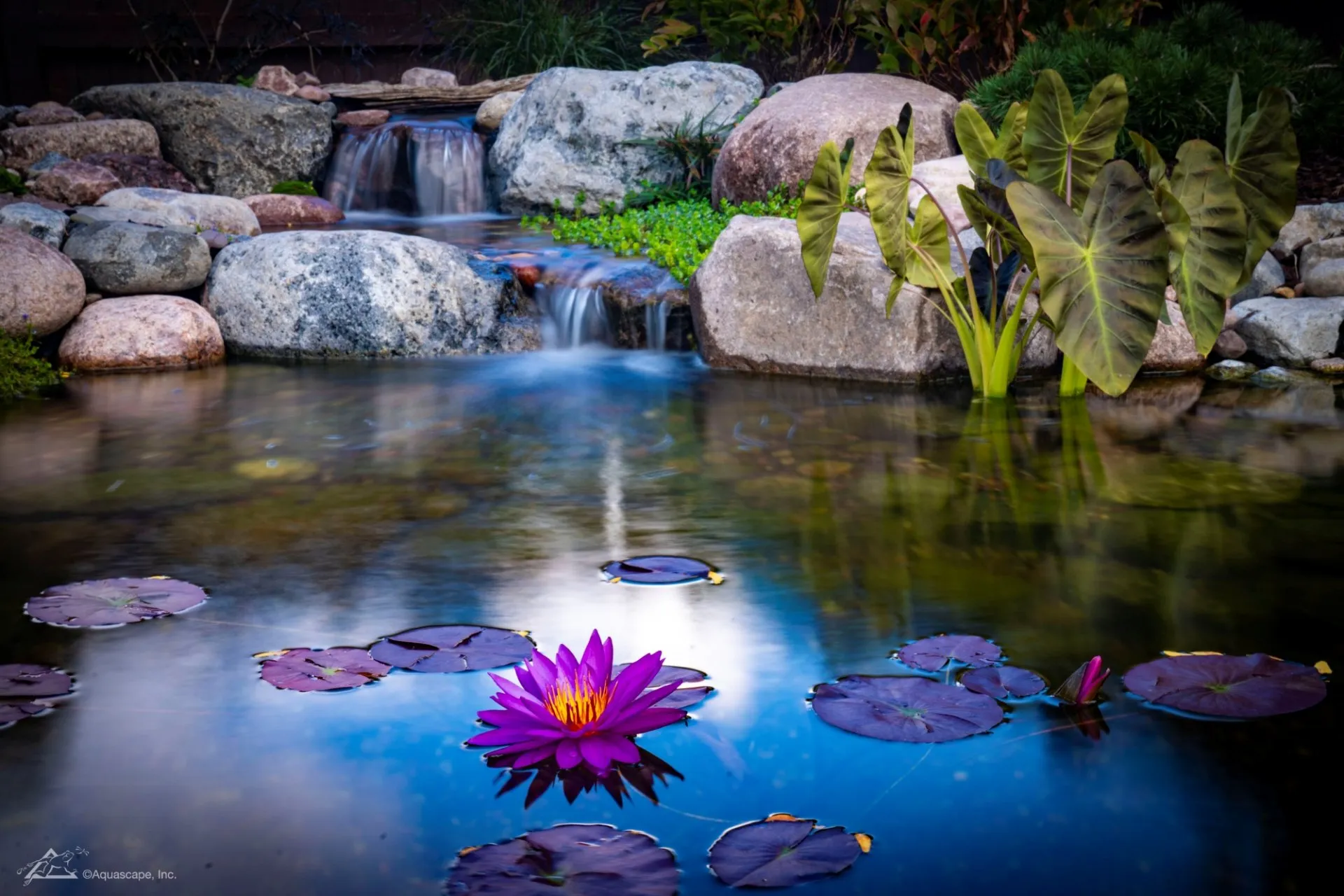
The Importance of Filtration and Circulation
Before tackling specific pond issues, it helps to understand what keeps pond water healthy in the first place.
A properly designed ecosystem pond uses mechanical filtration to remove debris, biological filtration to break down waste, and continuous water circulation to keep oxygen levels high and prevent stagnant areas. Pond plants, fish, beneficial bacteria, rocks, and gravel all work together to create balance.
Without adequate filtration or circulation, problems like algae, cloudy water, and sludge buildup become more common.
Problem #1: Sludge Buildup
Sludge is the dark, muddy material that settles on the bottom of the pond over time. It’s made up of decomposing leaves, fish waste, excess fish food, pollen, and other organic debris. A small amount of sludge is normal, but too much can reduce water quality, create odors, and contribute to algae growth.
How to Reduce Pond Sludge
The best long-term solution is prevention. Regularly removing leaves and debris before they sink helps minimize buildup. Proper water circulation also prevents debris from settling in dead zones.
Beneficial bacteria products can help naturally break down organic waste and reduce sludge accumulation. Specially formulated sludge-removers work with the pond’s ecosystem instead of harsh chemicals. Routine pond cleanouts and seasonal maintenance also go a long way toward keeping the pond bottom clean and healthy.
Problem #2: Algae Growth
Algae is probably the most misunderstood pond issue. The truth is, some algae is completely natural and even beneficial in small amounts. It becomes a problem only when growth gets excessive.
Algae thrives when three things are present:
- Sunlight
- Nutrients in the water
- Limited plant competition
Spring is especially common for algae blooms because pond plants haven’t fully matured yet, leaving excess nutrients available for algae to use.
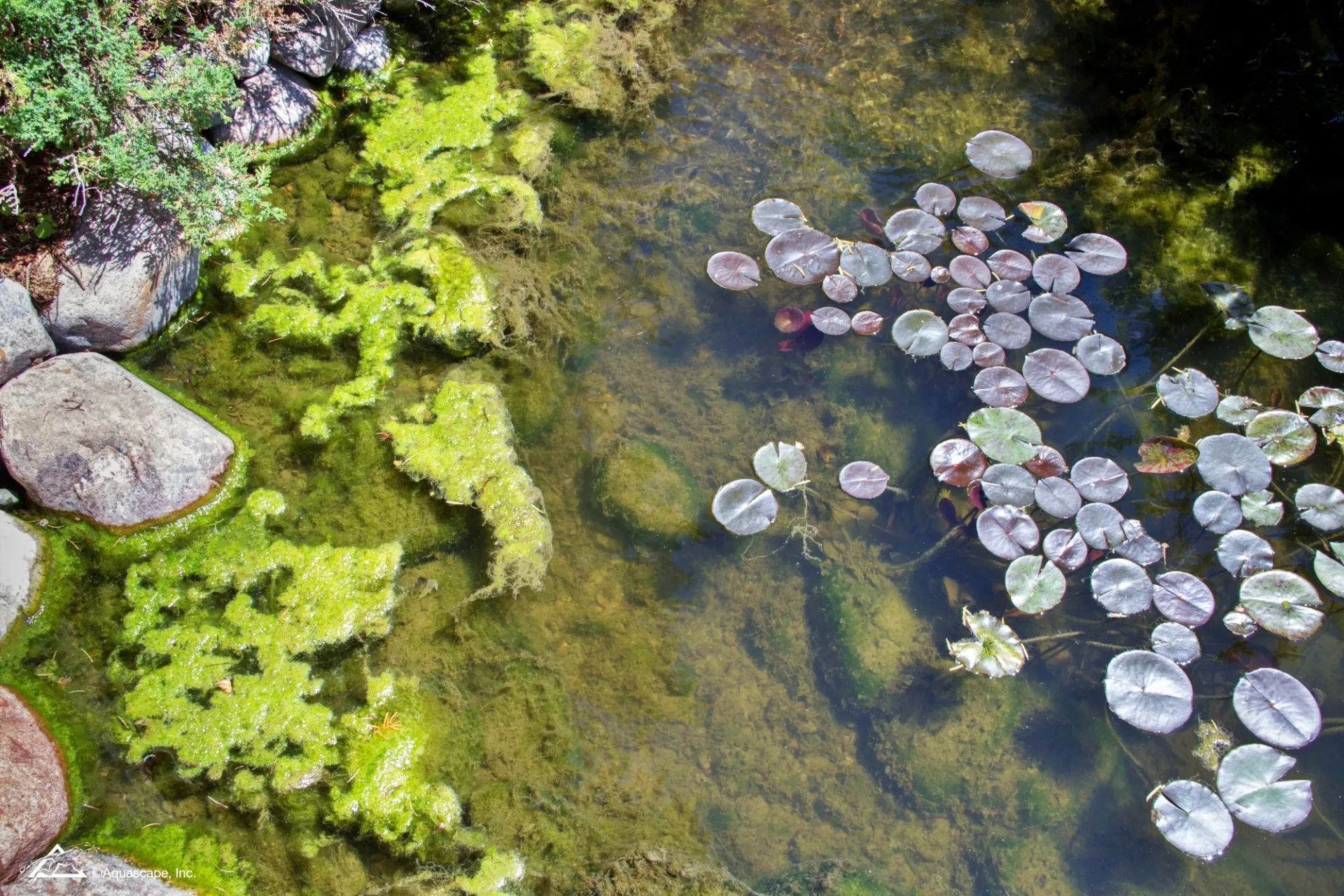
How to Control Pond Algae Naturally
The goal isn’t necessarily to eliminate algae completely. Rather it’s to keep it balanced. Here are some of the best ways to minimize algae naturally:
- Add more pond plants to provide shade and nutrient competition
- Avoid overfeeding fish
- Keep filters clean and functioning properly
- Maintain strong water circulation and aeration
- Use beneficial bacteria regularly
- Remove excess debris before it decomposes
For string algae or green water, targeted pond treatments can help restore balance without harming fish or plants. Products designed specifically for ponds are often most effective when combined with proper filtration and ecosystem management.
Problem #3: Cloudy Pond Water
Cloudy water can appear green, brown, or milky depending on the cause. In many cases, cloudy water is temporary and improves as the pond ecosystem matures.
Green Cloudy Water
Green water is usually caused by suspended algae blooms. UV clarifiers, proper filtration, and beneficial bacteria can help clear the water over time.
Brown or Tea-Colored Water
Brown water often comes from tannins released by leaves, mulch, or organic debris. Removing debris and performing partial water changes typically helps.
Milky or Gray Cloudy Water
This is often caused by suspended sediment, poor filtration, or a temporary bacterial bloom. It’s common after pond cleanouts or heavy rainstorms. Fine filter media, proper pump flow, and patience usually resolve the issue naturally.
A Healthy Pond Is About Balance
One of the biggest misconceptions about pond ownership is that ponds should look perfectly crystal clear every single day of the year. In reality, ponds are living ecosystems that naturally change with the seasons.
The healthiest ponds aren’t sterile. They’re balanced.
When filtration, circulation, plants, fish, rock and gravel, and beneficial bacteria work together, most common pond problems become much easier to manage. Small adjustments and consistent maintenance often make a bigger difference than dramatic treatments. With the right ecosystem approach, your pond can remain clean, healthy, and enjoyable all season long.